Say it like it is: Why direct language matters when talking to youth about suicide and self-harm

I’ve spent the last year working in a crisis stabilization unit for children aged 5-17, and one of the most important lessons I’ve learned is this: kids get it. They understand their own pain, their own thoughts, and — more often than not — they’re capable of using direct language to describe it.
Yet, time and again, I see well-meaning guardians and supportive adults hesitate. They soften their words, dancing around phrases like "hurt yourself" instead of "cutting," or "not wanting to be here" instead of "suicide." Maybe it’s fear. Maybe it’s discomfort. But when we avoid saying the actual words, we tell youth, “This isn’t something you should talk about.” We create barriers — barriers to understanding, to intervention, and, ultimately, to healing.
Advocating for the use of more direct language isn’t about semantics. It’s about safety.
The reality of youth suicide and self-harm
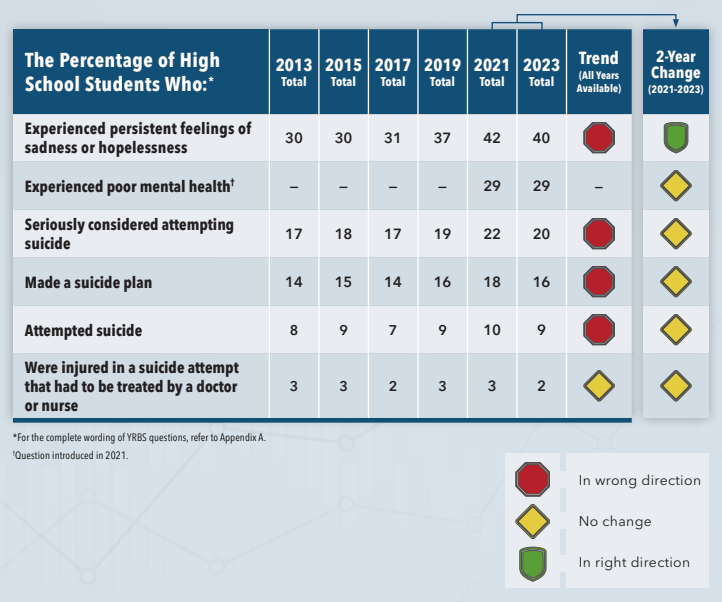
Let’s start with the hard numbers. Suicide is the second leading cause of death for young people ages 10 to 14, according to the CDC. That means every year, thousands of families lose loved ones to a crisis that often goes unspoken until it’s too late. The statistics get even more concerning when we look at historical trends of high school students experiencing suicidality.
In their 2013–2023 Youth Risk Behavior Survey Data Summary & Trends Report, the CDC found:
20% of high school students seriously considered attempting suicide
16% of high school students made a suicide plan
9% of high school students attempted suicide
Self-harm and non-suicidal self-injury (NSSI) is even more prevalent. But before continuing, let me quickly differentiate between NSSI and self-harm.
NSSI is marked by an absence of suicidal intent, which is to say that it is a coping mechanism and not an attempt to die. For example, a young person might cut to relieve their anxiety but not want to end their life. Self-harm is a broader term, one that can include acts of severe self-injury with unclear intent. This might look like a teen who overdoses “to escape” but is ambivalent or uncertain of whether or not they want to die.
A report published in Frontiers in Psychiatry that looked at the global prevalence of NSSI among adolescents found that up to 30% of US high school students engaged in NSSI. For that report, researchers defined NSSI as “the deliberate, self-inflicted destruction of body tissue, such as cutting, burning, and biting, without attempted suicide.”
Whatever the method of self-injury — cutting, burning, hitting, hair pulling, head banging — these are often attempts to cope with significant emotional pain. What’s more, many kids want to talk about what they’re feeling. They just don’t know how to start the conversation, or worse, they’ve learned that the adults in their lives — whether out of fear, discomfort, or misunderstanding — aren’t equipped to handle the truth.
So, who do youth turn to? (And why your language matters)
Research shows that when kids struggle, they usually confide in peers first. Only later, if at all, do they reach out to adults (e.g., parents, teachers, counselors, coaches), often testing the waters to see if they’ll be met with patience or panic.
Here’s the problem: vague language breeds miscommunication.
If a teen says, "I don’t want to be here anymore," and an adult responds with, "Oh, it’ll get better," instead of, "Are you thinking about ending your life?" that’s a missed opportunity. Worse, it can reinforce shame, making the child feel like their pain is too much or too scary to name.
Direct language, on the other hand, does two critical things:
Reduces stigma — It tells the child, "This is something we can talk about."
Clarifies risk — It helps adults assess urgency and intervene appropriately and effectively.
So, when a young person tells you they’re hurting themselves, don’t assume you know why. Ask plainly, “Are you doing this to cope, or because you want to die?” The answer guides your next steps. If it’s NSSI, focus on long-term coping strategies and therapy. If suicide is a factor, even if you’re not 100% certain, prioritize safety. That looks like removing lethal means, staying with them, contacting a crisis line, or even seeking a risk assessment at a crisis stabilization unit or hospital. Both answers require urgency, but the tools and resources you respond with are different.
How adults can approach these conversations
When talking to youth about suicide or self-harm, clarity and calmness make all the difference. Start by using direct language. Say "suicide" instead of "hurting yourself," and name specific behaviors like "cutting" or "killing yourself." Avoid vague terms that obscure or dance around the real issue at hand. Ask open but pointed questions: "Do you have a plan to end your life?" or "How often are you having these thoughts?" Your tone matters as much as your words; if you panic, they’ll retreat. Try to stay steady, even when your heart might be racing.
Equally important are the pitfalls to avoid. Never minimize their pain with phrases like "You’re just being dramatic" or react with shock. "How could you say that?!" shuts down honesty. And while confidentiality builds trust, never promise your confidence if they’re in danger. Safety always comes first.
To practice, try scripts like: "You mentioned not wanting to be here. Are you thinking about killing yourself?" or "When you say you ‘hurt yourself,’ do you mean cutting?" Close with reassurance: "I care about you. Let’s figure out how to keep you safe." These words bridge isolation and connection, which is the first step toward help.
Conclusion: Moving from fear to clarity
I get it. Talking about suicide and self-harm can be scary; it can feel like too much. But our avoidance of these conversations doesn’t protect kids; it isolates them. When we use direct language, we send a message: "Your pain is not too big for me to hold."
If you’re an adult in a young person’s life — whether as a parent, guardian, teacher, counselor, therapist, or mentor — educate yourself and practice saying the hard words out loud so you can say it like it is when it matters most. The right words, spoken plainly, can be the difference between silence and support, between crisis and connection.
A personal invitation
If you're looking for a therapist for yourself or a young person you know, I'd be honored to speak with you. In my practice, I support teens and adults in unpacking, making sense of, and growing from their past and present life challenges. Learn more about me here.
Whether you're dealing with anxiety, depression, burnout, relationship issues, or just feeling stuck, I'm here to listen and work with you toward positive change.
Reach out for a free consultation. Together, we will figure out where to begin.