Signs of depression in men: Why it often looks like anger, not sadness
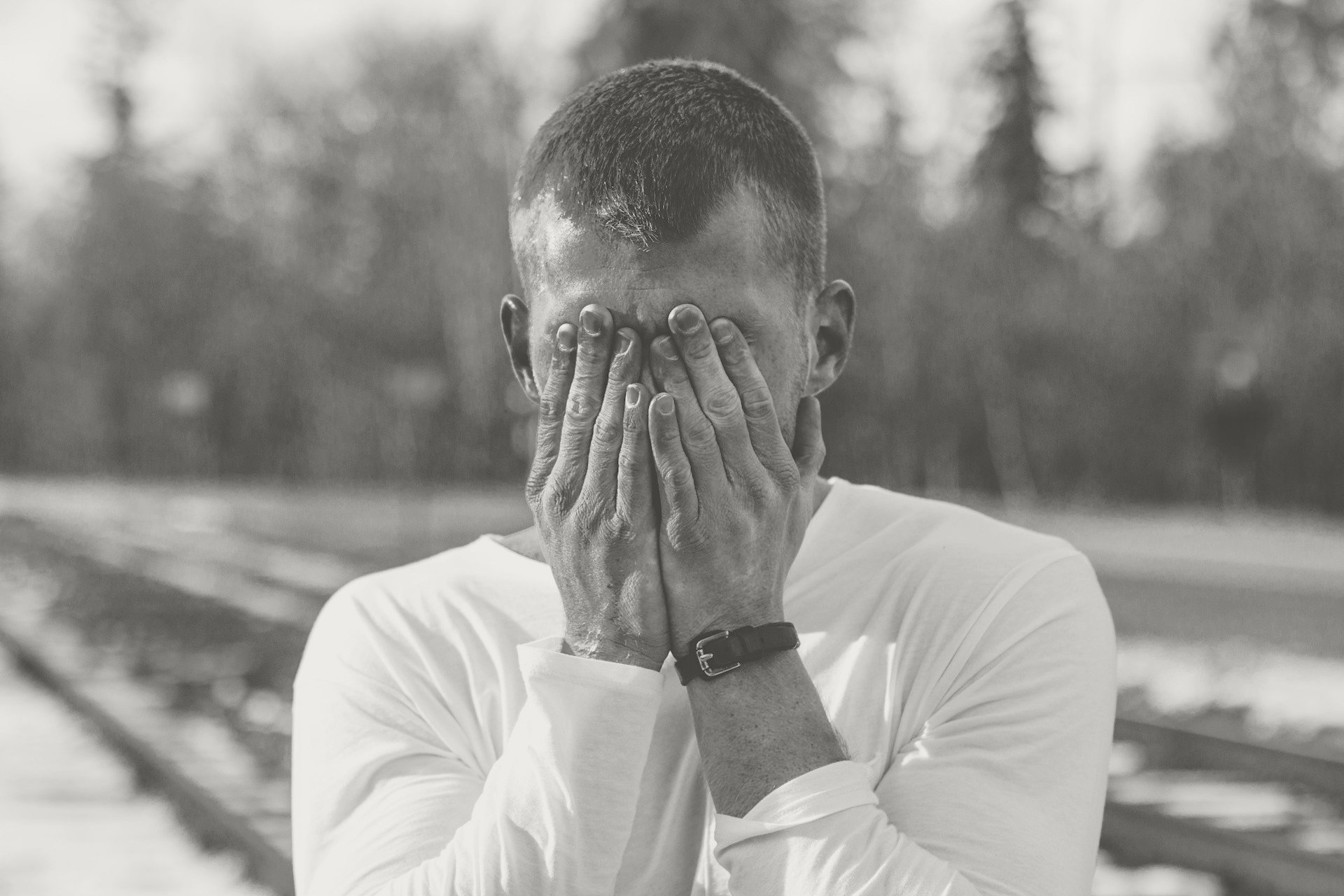
The man who wasn't sad, he was just "fine"
He didn't come in saying he was depressed. He came in because his girlfriend had told him, gently but firmly, that something needed to change. He wasn't sad, he told me. He wasn't crying in his car or lying in bed unable to get up. He was just tired all the time, short-tempered with the people around him, working later than he needed to, and picking fights over things that didn't matter. "I'm not depressed," he said. "I'm just stressed."
Six months later, once we'd done enough work for him to actually feel the difference, he told me he'd had no idea how depressed he'd been. That gap — between what depression is supposed to look like and what it actually looked like in him — is one of the most common things I sit with in this work. So let's talk about the signs of depression in men, because most of what gets taught about depression was built around symptoms that show up more reliably in women, and many men can fall through the cracks as a result.
Why depression in men gets missed
When most people picture depression, they picture sadness. Tears, withdrawal, a flat affect, someone who can't get out of bed. Those symptoms absolutely show up in men too. But men are far more likely than women to express depression through what researchers call "externalizing behaviors" — anger, irritability, risk-taking, and overwork — rather than the sadness and hopelessness we tend to associate with the word "depressed." One study on men diagnosed with major depressive disorder found men were twice as likely as women to experience anger attacks during a depressive episode. The same report found that among men, anger correlated strongly with depressive symptoms, and the effect was strongest in men who identified most closely with traditional, rigid masculine norms.
In other words: the more a man was taught to see anger as acceptable and sadness as weakness, the more likely his depression is to come out looking like anger instead of what he's actually feeling underneath it.
This isn't a small clinical footnote. An estimated 6 million men live with depression in the U.S. each year, and a meaningful number of them never get diagnosed, largely because neither they nor the people around them recognize the symptoms they’re looking at.
The signs to actually watch for
Here's what depression in men more often looks like in practice — not always instead of sadness, but frequently in addition to it or in place of it.
Persistent irritability or a short fuse. A man who's usually easygoing starts snapping at his partner, his kids, or his coworkers over things that wouldn't have bothered him a year ago. Family members often describe this as "he's just stressed" or "he's been in a mood," which is exactly why it gets missed — it reads as personality or circumstance rather than a symptom.
Anger that feels out of proportion. Road rage. Arguments that escalate faster than the situation warrants. A general sense of being "on edge" that the man himself might not connect to anything specific.
Increased alcohol or substance use. Self-medicating with a drink (or several) after work, more frequently and in larger amounts than before, is one of the more common and more dangerous signs of depression in men — dangerous both because of what it does physically and because it further suppresses the emotional awareness that might otherwise lead a man to notice something is wrong.
Overworking. Throwing himself into his job, staying later than necessary, picking up more than he can reasonably carry — not out of ambition, but because it's easier to be busy than to sit still with whatever he's avoiding.
Withdrawal from relationships. Pulling away from friends, becoming harder to reach, turning down invitations he used to accept without thinking. This often overlaps with what I've written about before regarding men and the erosion of close friendships — depression and isolation feed each other in both directions.
Physical symptoms with no clear medical cause. Headaches, back pain, digestive issues, chronic fatigue. Men are often more comfortable describing a physical complaint to a doctor than an emotional one, and depression frequently shows up in the body first.
Risky or reckless behavior. Driving too fast, taking unnecessary physical risks, or making impulsive decisions that are out of character.
Loss of interest, even if it doesn't look like sadness. Sex drive drops. Hobbies stop being interesting. He still shows up to work and still functions, but something that used to feel like pleasure now just feels like going through the motions.
None of these signs on their own mean a man is depressed. But when several of them show up together and stick around for more than a couple of weeks, it's worth taking seriously, both for the man experiencing it and for the people who love him.
Why this matters more than it might seem to
Depression that goes unrecognized doesn't just sit quietly in the background. It's one of the most significant risk factors for suicide, and men are already dying by suicide at more than four times the rate of women in the U.S. A lot of that gap isn't because men are more depressed than women — surveys generally find the opposite: women report depression more often. It's because men's depression is harder to spot, gets treated later, and gets treated less often, in part because it doesn't look like what we've all been taught to look for.
This is also tangled up in what society teaches men and teaches us about men more broadly. Men are taught early that vulnerability reads as weakness, and that anger is one of the few emotions it's safe to show. So depression, when it arrives, gets funneled through the one emotional outlet that was always permitted. It's not that these men don't feel sadness or fear or grief — it's that anger is the only one of those feelings they were ever given room to express.
What to do if this sounds familiar
If you recognized yourself in any of this: you're not broken, and you're not weak, and "I'm just stressed" might be doing a lot more covering for you than you realize. Start by naming what's actually going on, even privately, even if the word "depressed" feels too big to say out loud yet. Notice the gap between how you're functioning and how you're actually feeling — showing up to work every day doesn't mean nothing's wrong. And talk to someone. A doctor, to rule out anything physical. A therapist, to actually work through what's underneath the irritability and the overworking and the withdrawal.
If you're the partner, friend, or family member of a man who sounds like they might be depressed: try not to take the irritability personally, even though it's aimed at you. Naming what you're noticing — "you've seemed more on edge than usual, and I'm wondering if something's going on" — often lands better than "you seem depressed," a word a lot of men will reflexively push back against even when it's accurate.
If you or someone you know is having thoughts of suicide, you can call or text 988 anytime, day or night, to reach the Suicide & Crisis Lifeline.
A personal invitation
I work primarily with men, and one of the most common moments in this work is a man realizing, partway through treatment, how long he'd been carrying something he never had the language for. If this post described more of your own experience than you expected it to, I'd be glad to talk with you. Reach out and let’s schedule time to chat. You don't need the right words yet — that's part of what we'll figure out together.